Saturday, 30 May 2015
Sunday, 24 May 2015
Girls in the southern suburbs...a class on their own.
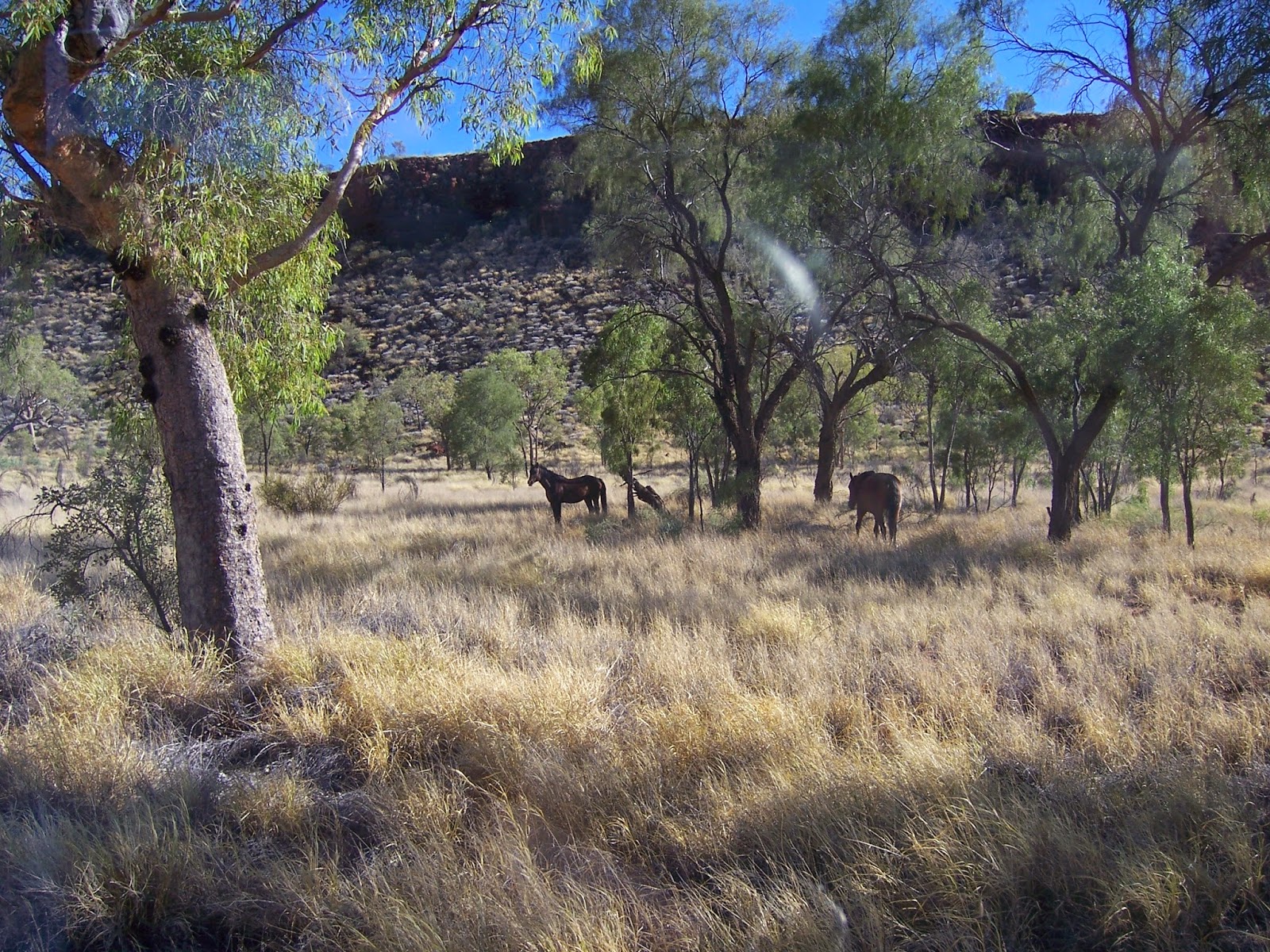
photo: taken by dheborah in the Northern Territories.
'wild brumbies' on protected Aboriginal land.
Disappointingly, I read an inflammatory website (written by four males) about women's tattoos, referring to them disparagingly as a South Perth bogan slut sign. Speaking to a lawyer, the consensus was that this was almost a 'jihardiist' statement in an age of emancipation. Tattoos have been used by tribes for thousands of years, by both men and women. They have both historical significance and are signs of adornment, bravery and tribe. I hate to break the news to you, but Perth's most skilled artists and the most educated have been moving to the southern suburbs in their droves.
Sunday, 19 April 2015
Durban: a living monument to the journey of a little boy and thirty Zulu warriors.
Art work by Dheborah
When I was a nursing student, I cared for an old lady who, unable to walk, had lived and slept in her armchair for the final eighteen years of her life. Once a sculptor, she told me of the statues that she had cast. One of these was the statue of a little boy that stood outside John Ross House, where I lived. In her day, when women couldn't open a bank account without their husband's signature, and in a time when a conservative South African society did not recognise, amongst other things, women's rights, this was historically significant.
The story of John Ross is just one of the many stories of courage that built the city of Durban. Even during the most dangerous of times, the city was full of tales of goodwill. History is built on each and every one of these moments. Once an architectural masterpiece, the massive, turbulent city still contains glimmers of it's past. Some of the finest statues remind us that Durban had a history. If the mistake was made of removing or destroying them, as has happened in other torn cities, would we be saying that history didn't happen?
'John Ross' was the name given in records, to a ship's apprentice (his real name was Charles Maclean) who made a 600 km journey for supplies and medicine. John Ross was part of a small settlement in Natal, that had been built from survivors of a ship that had floundered on a sand bar, off the Natal coast. The crew spent a few years repairing it to return to their own homeland. At the time of his journey, records say that he was a boy of thirteen (some records indicate that he may have been as young as ten). He was accompanied by a group of 2 porters and later by a group of Shaka Zulu' own warriors. They walked a dangerous journey to Delgoa Bay (Maputo, Mozambique)across difficult, wild terrain, making crocodile-infested river crossings and walking through country inhabited by elephants, giraffe, lions, leopards, impala and giant herds of hefty wildebeest. Illness had come to the settlement. It was here, in Delgoa Bay, that he first encountered evidence of the world's slave trade. It is said that these men saved the small colony of this Zulu coast's shipwreck survivors. Years later, Maclean died on board another ship, the "Solent". I heard, yesterday, that during recent fighting in Durban streets, two beautiful, haunting sculptures had been defaced. The past has already happened. It is over. Build new memories on tales of courage and goodwill. When I remember the one simple tale of Maclean, I wish but one thing…it is time for a new monument, not destruction of the old. It is time for bronze sculptures of ten brave and magnificent Zulu warriors to be made. Line them along the side of Durban city Hall and let them guard the entrance to this amazing structure, in the name of, and in the spirit of the goodwill that has survived from the tragedies of the past.
Friday, 17 April 2015
Saturday, 14 March 2015
Aboriginal Artist: David Moolooloo.
Aboriginal artist David Moolooloo's dot paintings are exquisite, painstakingly worked pieces. In Alice Springs, it is not unusual to find artists painting in a quiet spot, on a patch of grass, on any day of the week. At the Alice Springs Sunday markets this morning (Todd Mall), David and I stand next to one of his large, exceptional pieces. On close examination, this is a work of museum quality.
dheborah
Tuesday, 10 March 2015
Subscribe to:
Posts (Atom)